Andorra
Andorra is a small landlocked country in the Pyrenees mountains, known for its scenic landscapes, ski resorts, and unique co-principality system.
| Flag | 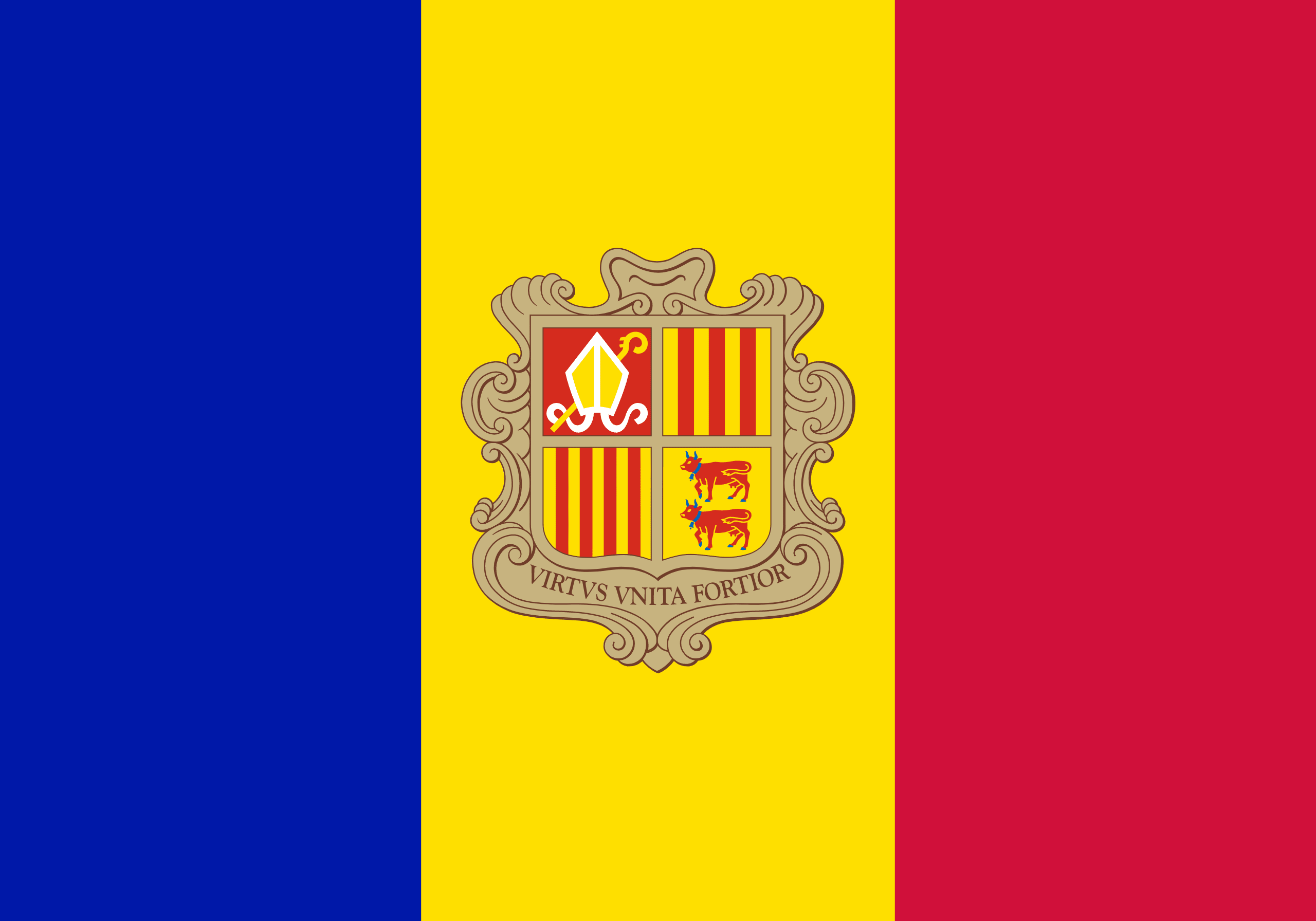 |
| -------------------- | ---------------- |
| Country Code ISO2 | AD |
| Country Code ISO3 | AND |
| Country Code Numeric | 020 |
| Capital | Andorra la Vella |
| Currency | Euro |
| Currency Code | EUR |
| Internet TLD | .ad |
| Calling Code | +376 |
| Time Zone | UTC +01:00 |
| Driving Side | Right |
| Area (sq. kms) | 468 |
| Demonym | Andorran |
| Official Language | Catalan |
| Largest City | Andorra la Vella |
| Date Format | DD/MM/YYYY |
|
| -------------------- | ---------------- |
| Country Code ISO2 | AD |
| Country Code ISO3 | AND |
| Country Code Numeric | 020 |
| Capital | Andorra la Vella |
| Currency | Euro |
| Currency Code | EUR |
| Internet TLD | .ad |
| Calling Code | +376 |
| Time Zone | UTC +01:00 |
| Driving Side | Right |
| Area (sq. kms) | 468 |
| Demonym | Andorran |
| Official Language | Catalan |
| Largest City | Andorra la Vella |
| Date Format | DD/MM/YYYY |
History
Andorra’s history is closely tied to its strategic location in the Pyrenees mountains between France and Spain. According to tradition, Andorra was granted a charter by Charlemagne in the 9th century as a reward for resisting Moorish forces. Over time, governance of the region came under a unique co-principality system established in 1278 through a feudal agreement between the Count of Foix and the Bishop of Urgell in Spain.
This dual sovereignty arrangement persisted for centuries, making Andorra one of the world’s oldest continuous political entities. Despite its small size, Andorra maintained relative independence while being influenced by its larger neighbors. In 1993, the country adopted its first formal constitution, transforming it into a parliamentary democracy while retaining the co-princes—now the President of France and the Bishop of Urgell—as ceremonial heads of state.
Since then, Andorra has modernized rapidly, developing a strong economy based on tourism and finance, while preserving its cultural heritage and political uniqueness.
 ADA Programming
 C Programming
 C# Programming
 C++ Programming
 F# Programming
 GO Lang
 Haskell
 Java
Java
 JavaScript
 Julia
Julia
 Kotlin
 Lua Programming
 PHP
PHP
 Python
 R Programming
 Ruby
Ruby
 Rust
Rust
 Shell Script
 Swift Programming
 Appetizer
 Breakfast
 Chutney
 Curry
Curry
 Desserts
 Jam
Jam
 Jelly
Jelly
 Main Course
 Pickle
 Salad
Salad
 Sauce
Sauce
 Side Dish
 Snack
Snack
 Soup
Soup
 Sweets
 Ashtottara Shatanamavali
 Hitopadesha
 Panchatantra
 Temple
 Logical Reasoning
 Reading Comprehension